Part 3: #30
After our experience with #77 we took a few weeks to grieve. At first it seemed we would truly never find home, the future felt pretty hopeless. The only thing we could do, during this time, was compile a list of lessons we had learned in case we ever got the opportunity to put another offer in on another potential home place. Here are the lessons as we wrote them at that time:
- Decolonize your approach. Center the whole, not just our family’s wants.
- Community is most important. We can work with whatever soil types as long as there is sun.
- Don’t focus on what a place lacks, but what ki offers. Be mindful of our approach. Approach ki respectfully, with warmth and love.
- Be humble. How lucky would we be to have a home here? No matter the specifics of the place. What future is possible here?
- If we are serious enough to make an offer, start with asking price. Value the we, the us, the more-than-us. Leave stinginess far behind.
- Remember the whole story and context that brought us to this point. Do not focus on the isolated moment-in-time, but on the interconnections. What are the signs? How many people are in this with us? Do we want to keep looking forever?
- Once the land is ours, we can set them free. Anything is possible.
- BELIEVE (in) those who love us: what they say to us, see in us. Remember we are often not the best experts on ourselves.
- How do we cultivate our soil for next time? How do we want to be in that high stress process?
After letting these lessons settle in a bit, we began to turn our attention to the other parcel of land that would soon be for sale, right down the road from the first parcel we had visited (#77). Now, when we decided to take the lead on #77, one of the other wonderful humans that had responded to the idea of intentional neighboring had decided to take the lead on trying to figure out how to purchase #30. So there was already someone spending a lot of time, attention, and heart space on trying to figure out how to bring that land into the stewardship of our broader community.
#30 was very different in several key ways:
- The family that owned it were friends of friends and offered to refrain from listing the land publicly if we could figure out a way to put an offer on it.
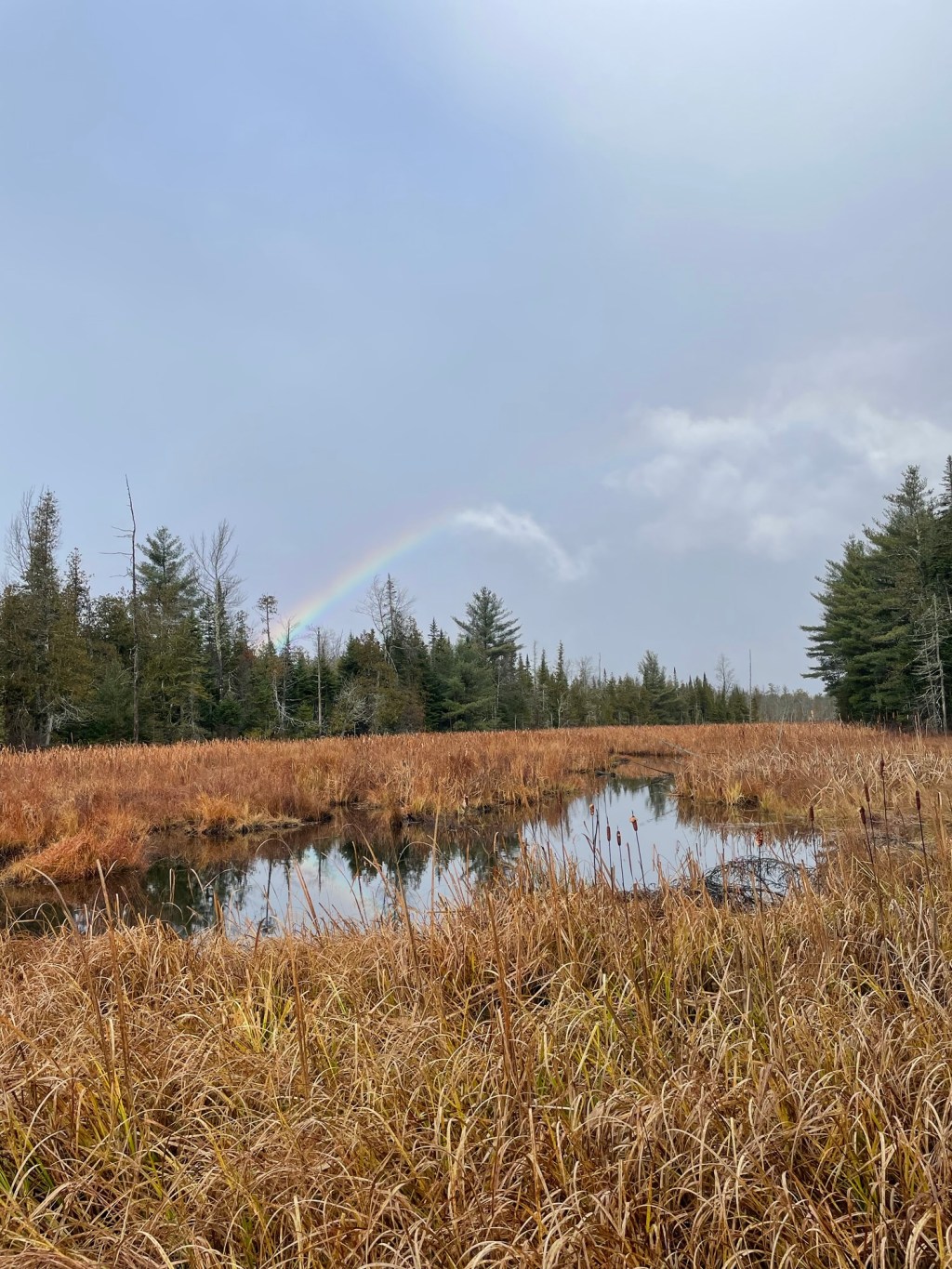
- The land was also 80 acres, but had a full size and well maintained house, a 1 car garage and attached workshop, a wood shed, and a garden shed. There were gardens (if overgrown), apple trees, grapes, berries, small fields, and trails maintained throughout the mixed hardwood and softwood forest. There were wetlands and small ridges, old rock walls, and many hidden beautiful places.
- They were asking $450,000.
After a few weeks of grieving we asked the group of humans who had expressed interest in intentional neighboring to reconvene. We asked our friend if they would be interested to work together to try to purchase #30. Her response was very positive: our family was in direct relationship with a $250,000 gift, we had good credit, we had a higher income – and they generously invited us to take the lead. We accepted.
We had $250,000 of the $450,000 that was being asked – how would we go about getting together the rest? We began to imagine how we could not let our fear of scarcity rule us. Maybe we could take out a mortgage for $200,000 in addition to the gift? Maybe we could sell parcels to refill our bank account if we drained it? Once the land is ours, we can set them free, can make home for people we know and love, or who are known and loved by the people we know and love. Our friend was interested in buying a parcel of the land and putting a house on it. And, we were hesitant to pursue a subdivision due to the threat of further fragmenting the land. We began to research and explore different models that could offer people living on the land equity, without subdividing the current 80 acres.
We started sharing the stories of what had happened with the #77, and what we were still trying to do. We put together a short document that explained how we were working together, that described the land of #30, and how much money we needed to raise. We shared the general information with Ava and her wife Gen and our family invited them over for dinner to discuss. The night we were slated to eat together one of their beloved goats went into labor and they were only able to come for a short moment. We packed them up a beautiful feast with several courses to take with them up to the cold barn on the side of a mountain in Vermont and shared a brief cup of hot tea before they went on their way. In that time Gen looked at us and she said, “We would like to give you the full $450,000. I don’t want any parents to be in debt, not ever.” She talked at length about her experience growing up in poverty at various points in her life, and the challenges her family faced. Gen and Ava shared how they were relating to their now-shared financial privilege and we had a beautiful, if brief, conversation.
Suffice it to say – our family was shocked. We knew that Ava and Gen were also seeking home and had wondered if they might visit the land with us, or if they might offer the last $200,000 as a loan – but for the full $450,000 to be offered as a gift… this was not only some of the most radical generosity we had imagined, but it also felt like a huge responsibility. We returned to our earlier feelings when we were first offered $250,000. Who are we to receive such a gift? How could we possibly accept? How could we possibly ensure that the gift does not stop with our family, but continues to move through the world beyond us? And yet, we believed that with THIS land, with THIS group of people trying to do it together, it was possible. We reflected on all that had happened:
- Our years of searching for home
- How within 2 days of asking Brook for help, our dear friend had reached out with this opportunity
- How we were working with a group people to try and provide home for multiple human families
- All we had learned with #77
And we believed that more than any other place we had imagined living, that we could find ways to keep the gift moving through and beyond this land that seemed to be calling us home.
We accepted, and there is much that Ava, Gen, and our family could tell of the conversations that followed. We had more beautiful dinners, walks in the woods, and we practiced talking about money together, about where our comfort and discomfort edges were, and about logistics and dreaming alike. Maybe we will tell more of those conversations someday – we welcome inquiries.
Yet – at this point, we still had not visited the land or family at #30. Once we had accepted the increased gift we let our co-collaborators know and we all rejoiced together and began to plan a shared visit to the family and land at #30.
And that is how, in early April 2024, our family, and our dear friends and co-collaborators, found ourselves gathered at #30 together on a beautiful day with the lovely family that currently lived there. We spent over an hour exploring the land with them, walking the gardens, fields, and woods trails. They showed us the slow moving brook at the back of the parcel, the hunting blind, the apple trees, the places they had grown food, the high point, and more. They clearly loved the land, and share their care and reverence with us. As the group gathered at the end of the tour, our family stepped to the side. Tyler had tears in his eyes. “Do you think we could live, and grow here?” Heather asked. “Yes, I really do,” he said. And so we offered the family their asking price of $450,000 and they accepted.
The next few months were a whirlwind – finding inspectors, title companies, home insurance, etc. We learned that the leach field needed to be replaced and that the well water had coliform bacteria. We worked closely with the family who lived there and were able to figure it all out. Ava and Gen transferred $450,000 to our credit union and the lovely staff there nearly fainted, sure we were allowing ourselves to become the victim of some kind of scam. They had never heard a story like ours before. Eventually, we convinced the bank to accept the gift on our behalf and on June 24, 2024 Tyler and Heather’s names appeared on the title documents for the land and home of #30. This concept, of entitlement to land, is a weight we carry daily, as closely as we carry the gratitude and awe of being called home to a place.
The following months were filled with the stress and grief, and occasional unexpected joy, of moving. We are serious homesteaders, very small scale farmers, and farming comes with a lot of STUFF. We started living in Maine in mid-August 2024, and Tyler was still making trips back to Vermont as late as mid-October.
More than the moving though, or at least equal to it, was the pain and grief and sadness of saying goodbye to a beautiful place in Vermont we loved deeply and had tried to figure out how to stay, and failed. It was clear to us that, for some not yet known to us reason, we were meant to return to Maine, meant specifically to live on this land that has called us home. That did not lessen the pain of leaving that 100 acre farm in a gorgeous hollow, with a view of Great Mountain, in Vermont. The years we had spent praying to and with the trees, the Brook, the chaga, the ancient spring, the ridge ravines where fiddleheads, ramps, nettles, and wild ginger ran wild. The place we had raised our son for the past almost 5 years of his life, the friendships we all had invested so deeply in. The grief of the summer of 2024 will not be forgotten, nor the generosity, nor the hopefulness, nor the abundance.
There is so much more that can be said. We hosted a goodbye gathering with our Vermont neighbors, friends, and community in June that was starkly beautiful and many tears were shed. All the visits and conversations and compromises and surprises that summer and fall brought us. Not everything can be put into words.
This is the story of how we came back to Waldo County, how we came to live on this particular land that we believe has called us home here. More stories of the days that follow will continue to be shared as they emerge. Stories that emerge as we seek to imagine that, just maybe, we have been claimed by a place, that we are some of the humans of Hemlock Hill.
Thank you for reading.
 homesong